Ohio Employee Handbook Requirements (2026)
Ohio has state-specific policies your employee handbook needs to address. That number looks small next to California or Illinois, but the traps are real: anti-discrimination coverage starts at just 4 employees, youth employment fines hit five figures, and SB 47 rewrote the overtime playbook. Here's what to get right. Please keep in mind requirements may vary based on company size, industry, location, and workforce composition.






At a Glance
Policy Breakdown by Category
Ohio requires 10 state-specific handbook policies. Here's what each one covers, without the legalese.
Leave
4 policiesCompliance
3 policiesWage & Hour
2 policiesTermination Pay
1 policyNeed the Complete Ohio Addendum?
Get the full policy language for all 10 Ohio requirements, kept updated every week by our compliance team.
Talk to Our TeamCommon Compliance Pitfalls in Ohio
The mistakes we see most often, and how to avoid them.
Ohio Revised Code Section 4109.07 sets specific restrictions on when and how long minors can work: a mandatory 30-minute break after five consecutive hours, no school-hour work for those under 16, a 40-hour weekly cap for minors under 16, and a ban on work before 7:00 a.m. or after 11:00 p.m. on school nights for 16- and 17-year-olds.
What makes this dangerous is the penalty structure. Under ORC 4109.99, a first offense is a minor misdemeanor. Each subsequent offense jumps to a third-degree misdemeanor. And here is the part that catches employers off guard: each minor counts as a separate offense. Scheduling four teenagers outside allowable hours means four separate charges, not one.
Real enforcement bears this out. An Ohio lathe mill paid $22,000 in fines after employing a 15-year-old to operate a wood processing machine and scheduling four minors outside allowed hours. A Cincinnati pizza restaurant was fined $30,000 for allowing children under 16 to operate gas ovens and scheduling 16 minors in violation of hour rules. Nationally, child labor violations verified by the U.S. Department of Labor have increased 31% since pre-COVID levels, and 84% of all verified violations in 2024 came from food and drink service businesses.
Governor DeWine vetoed a 2023 bill that would have loosened Ohio's youth employment protections, signaling that enforcement is tightening.
The fix: If you employ anyone under 18, build a separate scheduling template that hard-codes the Ohio hour and break restrictions. Train shift managers specifically on minor worker rules. Audit your scheduling records quarterly, especially if you are in food service.
Sources: ORC 4109.07, ORC 4109.99 (penalties); U.S. DOL child labor enforcement data (2024).
Federal Title VII requires 15 employees before anti-discrimination protections apply. Ohio's Civil Rights Act (ORC Chapter 4112) sets the bar at just 4 employees. That means the corner shop, the small accounting practice, and the family-run restaurant are all covered.
Ohio law protects against discrimination based on race, color, religion, sex, military status, national origin, disability, age, and ancestry. Two of those categories (military status and ancestry) go beyond what federal law explicitly covers.
The 2021 overhaul of Ohio's employment discrimination statute brought several procedural changes. The statute of limitations was shortened from six years to two, and employees must now file a charge with the Ohio Civil Rights Commission under ORC 4112.052 before bringing a lawsuit in court. But these procedural reforms do not reduce the substantive risk.
Pitt Ohio Express Inc. paid $2.43 million to settle an EEOC discrimination lawsuit involving workers at Ohio terminals. The EEOC sued an Ohio nursing and rehabilitation facility for combined age and sex discrimination. And in 2025, the Ohio Civil Rights Commission itself paid $650,000 to settle two employment discrimination lawsuits from former employees who alleged sex-based favoritism.
The fix: If you have 4 or more employees in Ohio, you need a written anti-discrimination policy, consistent enforcement, a documented complaint investigation process, and regular training. Do not assume the federal small-business exemption saves you. It does not.
Sources: ORC 4112.01, ORC 4112.02, ORC 4112.052; Pitt Ohio Express Inc. EEOC settlement; Ohio Civil Rights Commission FY2024 enforcement data.
Ohio's overtime landscape experienced two major shocks in a two-year span, and many employers are still catching up.
SB 47 (effective July 6, 2022) made two changes that matter. First, it eliminated the "hybrid" collective action structure that allowed Ohio overtime lawsuits to combine opt-in federal claims with opt-out state class claims. Under ORC 4111.031, all Ohio overtime claims are now opt-in only. Each employee must give written consent and file it with the court. That is a meaningful litigation reform.
Second, SB 47 incorporated the federal Portal-to-Portal Act into Ohio law, which limits the compensability of certain pre-shift and post-shift activities. But this exemption is narrower than many employers think. Activities that are integral and indispensable to the employee's principal work remain compensable. Misapplying the exemption creates new exposure.
Then came the salary threshold chaos. The DOL attempted to raise the exempt employee threshold from $684/week to $844/week (July 2024) and then to $1,128/week (January 2025). A federal court vacated the entire rule in November 2024, reverting the threshold to $684/week ($35,568/year). Employers who preemptively raised salaries or reclassified employees during this period may now have inconsistent pay practices.
The fix: Audit your exempt classifications now. If you reclassified employees during the 2024 threshold shuffle, make sure their current status is correct under the $684/week threshold. Update your overtime policies to reflect SB 47's opt-in requirement.
Sources: ORC 4111.03, ORC 4111.031 (SB 47); U.S. DOL overtime rule (2024), vacated by E.D. Texas, Nov. 2024.
Ohio's Smoke-Free Workplace Act (ORC Chapter 3794) requires "No Smoking" signs at every entrance to every workplace. That much, most employers know. What trips people up are the details.
The signs must include the state's toll-free enforcement hotline number: 1-866-559-OHIO. Generic "No Smoking" signs from a hardware store do not meet this requirement if they lack the hotline number. Under ORC 3794.06, each sign must be clearly legible and posted at every entrance.
As of September 30, 2021, the definition of "smoking" was expanded to include electronic smoking devices and vapor products. Employers who updated their no-smoking policies years ago but never added vaping are out of compliance. The law also requires employers to prevent smoke and vapor from entering prohibited areas through entrances, windows, or ventilation systems. If your building's HVAC pulls air from a spot near the entrance where employees gather to smoke, that is a compliance issue even with all the right signs posted.
Penalties start at $100 for a first offense and climb to $2,500 for repeat violations. The law also includes an anti-retaliation provision: you cannot fire, threaten, or otherwise punish an employee for reporting a smoking violation or cooperating with an investigation.
The fix: Order new signage that includes the state hotline number and covers e-cigarettes and vaping. Update your handbook to explicitly include vaping and electronic smoking devices. Audit your physical workspace to ensure smoke-free zones extend to areas near entrances and ventilation intakes.
Sources: ORC Chapter 3794, ORC 3794.06 (signage); Ohio Admin. Code Chapter 3701-52; 2021 amendment expanding to e-cigarettes/vapor products.
Ohio Has 3 Employer Notice Requirements
Beyond handbook policies, Ohio employers must provide specific notices to employees for events like new hires, terminations, and qualifying events.
View Ohio Notice Requirements →Check Your Ohio Compliance in Minutes
Upload your handbook and get an instant compliance report, checked against 1,000+ rules including Ohio-specific requirements.
Try Our Free Employee Handbook Audit →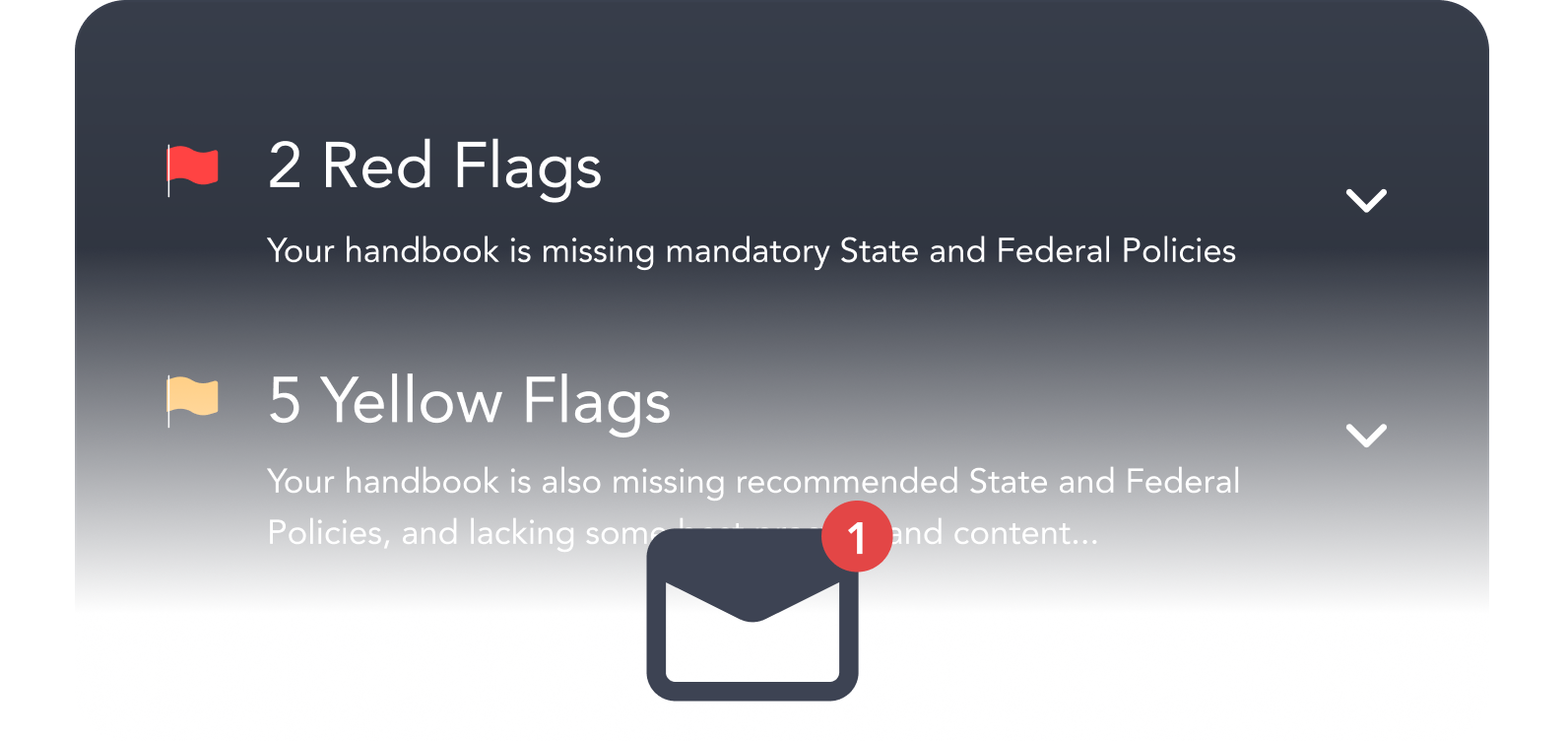
Understanding Ohio's Unique Anti-Discrimination Framework for Small Employers
If you run a business in Ohio with even a handful of employees, you are already on the hook for one of the broadest state anti-discrimination laws in the country. While federal Title VII requires 15 employees before it applies, Ohio Revised Code Chapter 4112 sets the bar at just four. That is not a typo. Four employees.
This means the corner shop, the small accounting practice, and the family-run restaurant are all covered. Ohio law protects against discrimination based on race, color, religion, sex, military status, national origin, disability, age, and ancestry. Two of those categories (military status and ancestry) go beyond what federal law explicitly covers.
The 2021 overhaul brought several employer-friendly procedural changes, including a shortened statute of limitations from six years down to two, and a new requirement that employees must first file a charge with the Ohio Civil Rights Commission before bringing a lawsuit in court. But these procedural changes do not reduce the substantive risk. The Commission continues to investigate complaints, and settlements regularly reach six and seven figures. Pitt Ohio Express paid $2.43 million to resolve a discrimination lawsuit involving workers at Ohio terminals.
For employers with fewer than 15 workers, this means you cannot rely on the federal small-business exemption. You need written policies, consistent enforcement, documented investigations of complaints, and regular training. Ignorance of the four-employee threshold is not a defense, and it is the single most common mistake small Ohio employers make.
Youth Employment in Ohio: What Every Hiring Manager Needs to Know
Ohio takes the employment of minors seriously, and the penalties for violations have real teeth. Under ORC Section 4109.07, employers face specific restrictions on when and how long minors can work, with additional protections around break periods and prohibited equipment.
The core rules are straightforward: minors cannot work more than five consecutive hours without a 30-minute break. Those under 16 cannot work during school hours or more than 40 hours per week. Teenagers aged 16 and 17 who are required to attend school cannot start before 7:00 a.m. on school days or work past 11:00 p.m. on nights before school days.
Where employers get into trouble is in the details. Scheduling software does not always flag these restrictions automatically. Shift managers may not be trained on the rules. And the food service industry is by far the most common violator. In Ohio, a lathe mill was fined $22,000 after a 15-year-old was injured while operating a wood processing machine. A Cincinnati pizza restaurant paid $30,000 for letting minors operate gas ovens and scheduling 16 teenagers outside lawful hours.
The U.S. Department of Labor has reported a 31% increase in verified child labor violations since before COVID, with 84% of 2024 violations coming from the food and drink service sector. Governor DeWine's 2023 veto of a bill that would have loosened Ohio's child labor rules signals that enforcement is tightening, not relaxing. If you employ minors, build compliance into your scheduling systems, train your managers, and audit your records quarterly.
Navigating Ohio's Overtime Landscape After SB 47 and the 2024 Salary Threshold Reversal
Ohio's overtime rules experienced two major shocks in a two-year span, and many employers are still catching up. The first was Senate Bill 47, which took effect on July 6, 2022, and fundamentally changed how overtime lawsuits work in the state. The second was the federal DOL's attempted salary threshold increase in 2024, which was ultimately vacated by a federal court in Texas.
SB 47 made two changes that every Ohio employer should understand. First, it eliminated the "hybrid" collective action structure that allowed Ohio overtime lawsuits to combine opt-in federal claims with opt-out state class claims. Under the new law (ORC 4111.031), all Ohio overtime claims are opt-in only. Each employee who wants to join a lawsuit must give written consent and file it with the court. This is a meaningful litigation reform that reduces the exposure from runaway class actions.
Second, SB 47 incorporated the federal Portal-to-Portal Act into Ohio law, which limits the compensability of certain pre-shift and post-shift activities like commuting to a worksite or performing routine startup tasks. But this exemption is narrower than many employers assume. Any task that is integral and indispensable to the employee's principal activities remains compensable.
On the salary threshold front, the DOL attempted to raise the exempt employee threshold from $684/week to $844/week (effective July 1, 2024) and then to $1,128/week (effective January 1, 2025). The November 2024 court ruling vacated the entire rule, reverting the threshold to $684/week ($35,568/year). Employers who preemptively raised salaries or reclassified employees during this period should audit their current pay practices to ensure consistency. AirMason's handbook builder tracks these regulatory changes so your policies stay current.
Ohio's Smoke-Free Workplace Act and the Vaping Update You Probably Missed
When Ohio's Smoke-Free Workplace Act (ORC Chapter 3794) was first enacted, vaping was barely on anyone's radar. Fast forward to 2021, and the Ohio legislature amended the law to expand the definition of "smoking" to include electronic smoking devices and vapor products. This update, effective September 30, 2021, means that every Ohio employer's no-smoking policy and workplace signage needs a refresh.
The signage requirements under ORC 3794.06 are specific. "No Smoking" signs or the international no-smoking symbol must be posted at every entrance to every workplace where smoking is prohibited. The signs must be large enough to be clearly legible, and they must include a telephone number for reporting violations. That number is the state's toll-free enforcement hotline: 1-866-559-OHIO. Generic "No Smoking" signs from a hardware store do not meet this requirement if they lack the hotline number.
Beyond signage, employers must actively prevent smoke and vapor from entering prohibited areas through entrances, windows, or ventilation systems. If your building's HVAC pulls air from a spot near the entrance where employees gather to smoke, that is a compliance issue even if you have all the right signs posted.
The penalties start small ($100 for a first offense) but climb to $2,500 for repeat violations. More importantly, the law includes an anti-retaliation provision. You cannot fire, threaten, or otherwise punish an employee for reporting a smoking violation or for cooperating with an investigation. For a relatively simple compliance area, the combination of expanded definitions, specific signage rules, and retaliation protections creates more risk than many employers realize. If you are not sure whether your current handbook reflects these updates, run a free compliance audit to find out.
Frequently Asked Questions
Explore Other State Requirements
More Resources
Build a Compliant Ohio Employee Handbook
Expert-curated policies, updated weekly, built for how HR teams actually work.